T2125 Form: Step-by-Step Guide for Self-Employed Canadians (2026)
Complete walkthrough of CRA Form T2125: every section explained, expense categories, and how to calculate net business income.
Key Takeaways
- Form T2125 is required for every self-employed Canadian — one per distinct business
- Report all business income, even amounts under $500 or without a T4A
- Parts 3-6 cover cost of goods; Part 7 is where most expense deductions live
- Vehicle expenses (Part 9) require a mileage logbook with business-use percentage
- CCA (Part 8) lets you depreciate equipment, vehicles, and computers over multiple years
What Is the T2125 Form?
Form T2125 — Statement of Business or Professional Activities — is the CRA form every self-employed Canadian uses to report business income and expenses. It is filed as part of your T1 personal tax return.
If you earn income as a freelancer, consultant, ride-share driver, delivery driver, contractor, or sole proprietor, you need a T2125. You file one T2125 for each distinct business activity.
Disclaimer
This guide is for informational purposes only and does not constitute tax advice. Consult a qualified tax professional for your specific situation. All figures are based on 2026 CRA guidelines.
Filing Deadlines
Self-employed Canadians have until June 15 to file their tax return, but any balance owing must be paid by April 30 to avoid interest charges.
Part 1: Business Identification
The first section asks for your business details. If you operate under your own name, enter your legal name as the business name.
You will need to provide a NAICS industry code. Here are the most common codes for self-employed Canadians:
| Business Type | NAICS Code |
|---|---|
| Ride-share driver (Uber, Lyft) | 485310 |
| Food delivery (DoorDash, Uber Eats) | 492110 |
| IT consulting | 541514 |
| Management consulting | 541611 |
| Freelance writing / design | 541430 |
| General contracting | 236110 |
| Personal training | 611620 |
| Photography | 541920 |
If you are unsure, search for your activity on the Statistics Canada NAICS website.
Part 2: Business Income
This is where you report your gross revenue.
- Line 8000 — Gross business or professional fees. Enter your total income before any deductions.
- Line 8290 — Reserves, returns, and allowances.
- Line 8299 — Adjusted gross income (Line 8000 minus Line 8290).
Uber and Gig Platform Income
Ride-share and delivery platforms provide annual income summaries, but CRA may not receive a T4A for small amounts. Always reconcile your platform summaries against your bank deposits. Report all income, including tips and bonuses.
Parts 3 Through 6: Cost of Goods and Total Income
Part 3: Cost of Goods Sold — Skip this section if you provide services rather than sell physical products. It applies to inventory-based businesses and e-commerce sellers.
Part 4: Gross Profit — Line 8299 minus cost of goods sold. For most service providers, gross profit equals gross income.
Part 5: Other Income — Report any grants, subsidies, or government assistance received in connection with your business.
Part 6: Total Income — Sum of gross profit and other income. This is Line 8230.
Part 7: Business Expenses
This is the largest and most important section. Every deductible business expense goes here, organized by CRA line number.
| Line | Expense Category | Notes |
|---|---|---|
| 8521 | Advertising | Website hosting, online ads, business cards |
| 8590 | Bad debts | Invoices you cannot collect |
| 8620 | Business tax, fees, licences | Business licence, professional dues |
| 8710 | Interest and bank charges | Business loan interest, merchant fees |
| 8760 | Office expenses | Supplies, printer ink, postage |
| 8810 | Management and admin fees | Platform fees (Uber, DoorDash), bookkeeping software |
| 8860 | Delivery, freight, express | Shipping costs for products |
| 8871 | Fuel costs (not vehicle) | Generator fuel, equipment fuel |
| 8910 | Insurance | Business liability insurance (not vehicle — that goes in Part 9) |
| 8960 | Maintenance and repairs | Equipment repairs (not vehicle) |
| 9060 | Meals and entertainment | 50% deductible — keep detailed receipts |
| 9200 | Office expenses | Small supplies, software subscriptions |
| 9270 | Travel | Business flights, hotels, ground transport |
| 9281 | Telephone and utilities | Business portion of phone, internet |
Do Not Double-Enter Vehicle Expenses
Vehicle expenses belong in Part 9. Do not enter gas, insurance, or vehicle maintenance in Part 7. Entering them in both sections results in a double deduction that CRA will flag on audit.
BookKeeper maps your expenses to T2125 lines automatically
Try it freePart 8: Capital Cost Allowance
Capital Cost Allowance (CCA) is the CRA's depreciation system. Instead of deducting the full cost of an expensive asset in the year you buy it, you deduct a percentage each year based on the asset class.
Common CCA classes for self-employed Canadians:
| Class | Rate | Assets |
|---|---|---|
| Class 8 | 20% | Office furniture, equipment over $500 |
| Class 10 | 30% | Passenger vehicles (cost under $36,000) |
| Class 10.1 | 30% | Luxury vehicles (cost over $36,000 — special rules) |
| Class 12 | 100% | Small tools and utensils under $500 |
| Class 50 | 55% | Computer hardware |
CCA vs Mileage Rate
If you claim CCA on your vehicle, you cannot also use the CRA mileage rate. Choose one method. CCA allows you to deduct the cost of the vehicle itself over time, while the mileage rate is a flat per-kilometre amount that includes all vehicle costs.
Part 9: Motor Vehicle Expenses
If you use a personal vehicle for business, Part 9 is where you calculate the deductible amount.
Step 1: Total all vehicle expenses for the year — fuel, insurance, maintenance, repairs, licence, registration, lease payments, or loan interest.
Step 2: Determine your business-use percentage by dividing business kilometres by total kilometres driven.
Step 3: Multiply total vehicle expenses by the business-use percentage. The result is your deduction.
Key limits for 2026:
| Item | Limit |
|---|---|
| Monthly lease payments | $900 maximum |
| Vehicle purchase (for CCA) | $36,000 maximum (Class 10.1 applies above this) |
| Loan interest | $300 per month maximum |
For a detailed breakdown of vehicle deductions specific to ride-share drivers, see our Uber driver tax deductions guide.
Part 10: Business-Use-of-Home Expenses
If you use part of your home regularly and exclusively for business, you can claim a portion of your housing costs.
Workspace Qualification
Your home office qualifies if it is either your principal place of business or a space used exclusively and regularly for meeting clients.
Calculating the Deduction
Measure the square footage of your workspace and divide it by the total square footage of your home. Apply that percentage to eligible housing costs:
- Rent (or mortgage interest — not principal)
- Property taxes
- Utilities (heat, electricity, water)
- Home insurance
- Maintenance and minor repairs
The Loss Restriction
Home office expenses cannot create a business loss. If your business income is $5,000 and your total home office deduction would be $6,000, you can only claim $5,000 this year. The remaining $1,000 carries forward to next year.
Part 11: Net Business Income
Line 9946 — Net income (or loss) from self-employment. This is calculated as total income (Part 6) minus total expenses (Parts 7 through 10).
This amount flows to your T1 personal tax return on Line 13500 (business income) or Line 13700 (professional income). It is subject to both income tax and CPP contributions.
Common T2125 Mistakes
Claiming 100% vehicle use without a logbook. CRA auditors look for this. Unless your vehicle is used exclusively for business, you need a logbook to support your business-use percentage.
Forgetting the industry code. Leaving the NAICS code blank can delay processing. Look up the correct code before filing.
Counting GST/HST collected as income. GST/HST you collect from customers is a liability to CRA, not revenue. Do not include it in Line 8000. Report it separately on your GST/HST return. See our GST/HST guide for details.
Not claiming CCA when eligible. Many self-employed Canadians miss the CCA deduction on their vehicle, computer, or equipment. It reduces your taxable income every year until the asset is fully depreciated.
Frequently Asked Questions
Do I need a T2125 if I have a part-time side hustle?
Yes. Any self-employment income must be reported on a T2125, regardless of the amount. Even a few hundred dollars from freelance work requires a T2125.
Can I file T2125 online?
Yes. Most tax software (TurboTax, Wealthsimple Tax, StudioTax) includes T2125 as part of the personal tax return. You can also file through CRA My Account using NETFILE-certified software.
What if I have multiple businesses?
File a separate T2125 for each distinct business activity. For example, if you drive for Uber and also do freelance consulting, you would file two T2125 forms with your T1 return.
How long should I keep my T2125 records?
CRA requires you to keep all supporting documents — receipts, invoices, bank statements, mileage logbooks — for six years after the tax year. Store them digitally or physically in a secure location.
Prepare for T2125 — track expenses all year with AI
Get started freeEric
Founder of BookKeeper. Building AI-powered bookkeeping tools for Canadian freelancers and small businesses.
View all postsRelated Articles
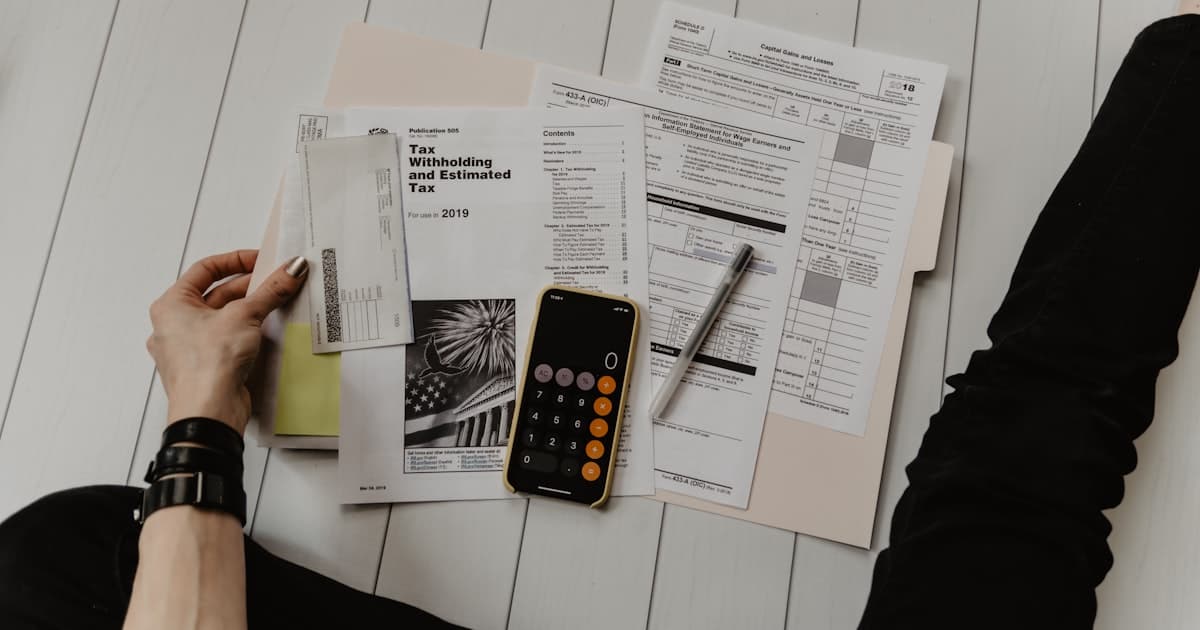
GST/HST for Small Business in Canada: Complete Filing Guide (2026)
Step-by-step guide to GST/HST registration, filing, Input Tax Credits, and provincial rates for Canadian small businesses.

How to File Taxes as a Self-Employed Canadian (2026): Step-by-Step
The complete guide to filing your self-employed taxes in Canada — deadlines, forms, deductions, and exactly what to do from January to June 2026.
Every Tax Deduction Canadian Small Businesses Can Claim (2026)
The master list of tax deductions for Canadian small businesses — organized by T2125 line number, with CRA rules and calculation methods for each.